

The decision to build a custom home is the start of an incredibly exciting journey. It is a rare opportunity to start with a completely blank canvas, to design a living space from the ground up that is a perfect and personal reflection of your family’s lifestyle, needs, and dreams. As you begin the process, it is easy to get swept up in the exciting aesthetic choices, like the style of the kitchen cabinets, the color of the siding, or the type of flooring you will use. While these are important details, the most critical and most permanent decisions you will make are those that concern your home’s fundamental layout and floor plan.
The layout is the very foundation of your home’s daily function and feel. A great floor plan can make a home feel spacious, intuitive, and a joy to live in, while a poorly designed one can be a source of constant, low-grade frustration for decades to come. Many common layout mistakes are not obvious on a two-dimensional blueprint and only reveal themselves after you have moved in. By understanding and avoiding these common pitfalls during the design phase, you can ensure that your custom-built home is not just beautiful, but also a masterpiece of comfort and functionality.
Mistake #1: Ignoring the Flow of Daily Life
A successful floor plan should feel like it was designed to make your daily routines easier, not harder. One of the biggest mistakes in home design is failing to think through the practical, day-to-day movements, or the “flow,” of the people who will live there.
Consider a simple but telling scenario: the grocery run. When you arrive home with your arms full of groceries, what is your path from the garage to the kitchen pantry or countertops? Is it a short, direct, and unobstructed journey? Or do you have to navigate through a narrow laundry room, open multiple doors, and walk the entire length of the house? A layout that creates a long and convoluted path for this common chore will be a source of daily annoyance.

The same principle applies to other routines. Think about the “laundry labyrinth.” Is the laundry room conveniently located near the bedrooms, where most of the dirty clothes and clean linens are generated? Or is it tucked away in a remote corner of the basement, forcing you to haul heavy baskets up and down multiple flights of stairs? A great floor plan anticipates and simplifies these daily journeys. It creates logical and efficient paths between the home’s primary zones, such as the path from the master bedroom to the coffee maker in the morning, or from the messy kids’ play area to the nearest bathroom.
Mistake #2: Poor Kitchen Layout and the “Work Triangle”
The kitchen is the undisputed heart of the modern home, and its layout is absolutely critical to the home’s overall functionality. A beautiful kitchen with an inefficient layout will be a constant source of frustration for the person who has to cook in it.
Click here to learn more about a kitchen remodel.
The cornerstone of good kitchen design for decades has been the “kitchen work triangle.” This is the conceptual triangle formed between the three primary work zones: the refrigerator for food storage, the sink for cleaning and prep, and the stove for cooking. In an efficient kitchen, the path between these three points should be clear, unobstructed, and relatively short, minimizing the number of steps a cook has to take to prepare a meal. Common layout mistakes often violate this fundamental principle. A kitchen designed as one long, straight galley can create an exhausting distance between the refrigerator at one end and the stove at the other. A large kitchen island that is poorly placed can become a major obstacle that sits directly in the middle of the work triangle, forcing you to constantly walk around it.
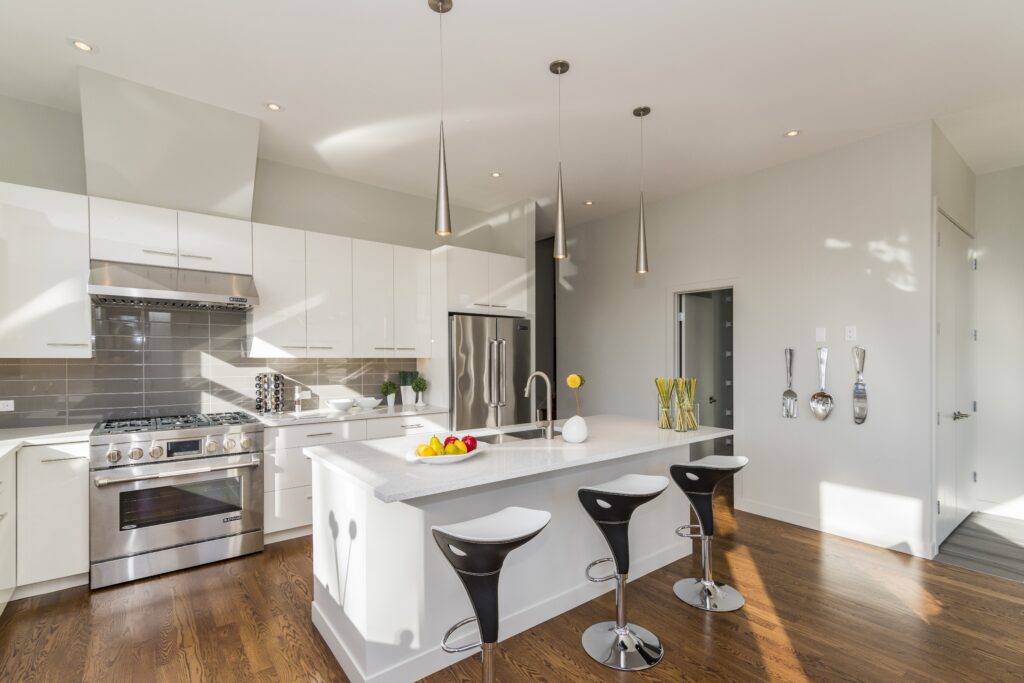
Beyond the work triangle, there are other common kitchen layout errors. One is not planning for enough counter space, especially the critical “landing zones” on either side of the stove and the sink. You need a place to set down a hot pot or to stack dishes for washing. Another major mistake is designing a layout where the main traffic pattern of the house cuts directly through the kitchen’s primary work area. This leads to constant congestion and interruption, which can be both inefficient and unsafe.
Mistake #3: Underestimating Storage Needs
If you ask a group of homeowners for their number one complaint about their current home, “not enough storage” is very likely to be at the top of the list. When designing a new home, it is incredibly easy to focus on the open living spaces and to underestimate the sheer volume of “stuff” that a family accumulates over time.
Effective storage is about much more than just the size of the bedroom closets. It requires a holistic, home-wide strategy for managing everything from everyday items to seasonal decorations. During the design phase, you should walk through your life and think about where everything will live. Where will you store the vacuum cleaner, the ironing board, and your cleaning supplies? Is there a dedicated linen closet for extra towels and bedding? Where will you put the holiday decorations, the luggage, the kids’ sporting equipment, and the bulk paper towels from the warehouse store?
Experience the luxury of a custom walk-in closet. Click here.
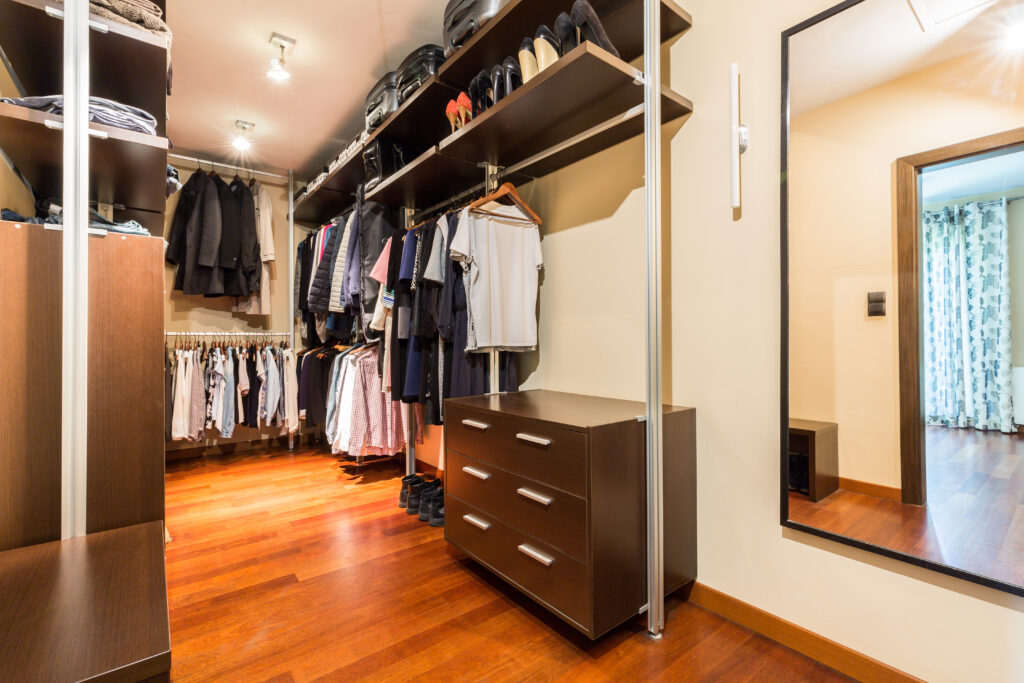
There are several key storage areas that are often overlooked in a basic floor plan but make a world of difference in a home’s organization. For a home in a four-season climate like Joplin’s, a dedicated entryway mudroom is a game-changer. It provides a crucial “drop zone” for coats, muddy shoes, backpacks, and wet umbrellas to land before they can clutter up your main living space. A true, walk-in pantry is also an essential feature for a modern kitchen, providing ample space for food, bulk items, and small appliances. By thoughtfully planning for these dedicated storage areas from the beginning, you can create a home that is naturally more organized and less cluttered.
Mistake #4: Forgetting About Furniture and Scale
A common pitfall in the design process is falling in love with a floor plan on paper without considering how it will actually function when it is filled with furniture. The empty spaces on a blueprint can be very deceiving, and it is essential to think about the scale of your rooms and how you will furnish them.
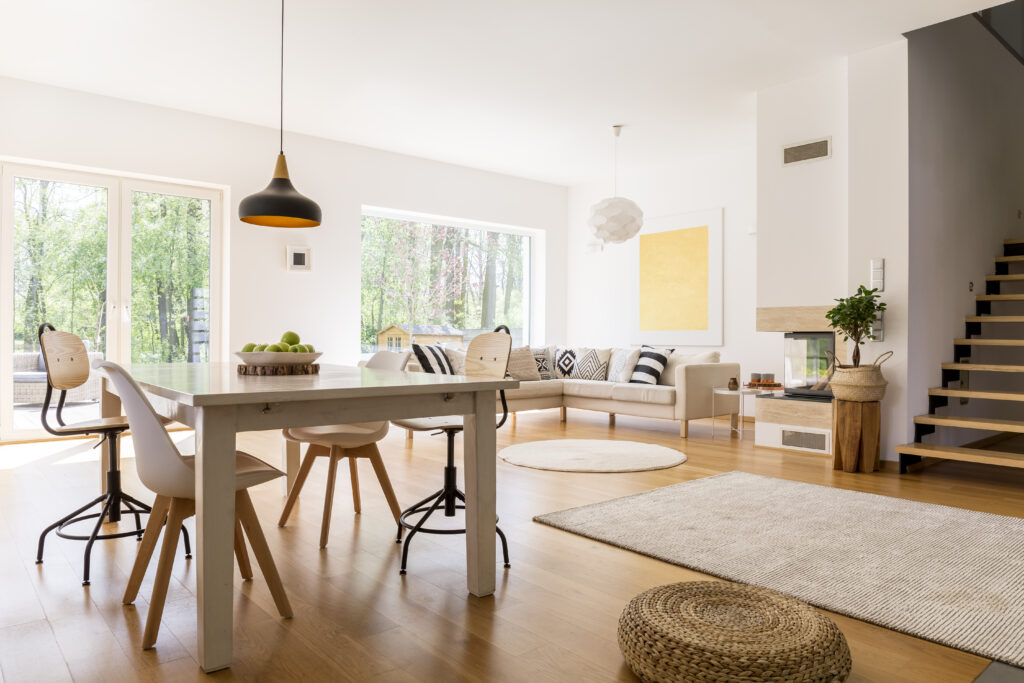
A frequent mistake is designing rooms with awkward dimensions, such as a long, narrow living room that has been compared to a “bowling alley.” These spaces, as well as massive, undefined open-concept areas, can be incredibly difficult to furnish in a way that feels cozy, balanced, and conducive to conversation.
Before you finalize your floor plan, you should take the time to measure your existing, essential pieces of furniture that you plan to bring to your new home. Will your beloved king-sized bed and its two nightstands actually fit comfortably on the main wall of your new master bedroom? Will your large, L-shaped sectional sofa completely overwhelm the new living room, leaving no space for walkways?
Hoping to turn your space into an open concept? Learn more about home renovation.
In the current era of open-concept design, it is also easy to forget the importance of solid wall space. An open and airy home is wonderful, but you still need places to put things. Where will you place the tall bookcase, the entertainment center for your television, or the family portrait you want to hang? A great design is a careful balance between that feeling of openness and providing enough defined wall space to make a room functional and easy to furnish.
Mistake #5: Ignoring the Connection to the Outdoors
Your custom home does not exist in a vacuum; it sits on a unique piece of property. A truly successful design is one that thoughtfully considers the relationship between the house and its surroundings. The placement of your windows and doors is not just an aesthetic choice; it is a decision that will define your home’s natural light, its views, and its connection to your outdoor living spaces.
The placement of your windows should be a strategic decision. You want to place them to take advantage of the best natural light, such as capturing the gentle morning sun in your kitchen nook, while also being mindful of avoiding the intense, heat-generating afternoon sun on a large, west-facing wall. Your windows should also be placed to frame the best possible views your Joplin property has to offer, while simultaneously providing privacy from your neighbors.

Just as important is the flow between your indoor and outdoor living areas. How do you get from your main living space or kitchen to your backyard patio or deck? Is it a welcoming and seamless transition through a large set of sliding or French doors that invites you outside? Or is it an awkward and inconvenient journey through a laundry room or down a narrow hallway? A strong indoor-outdoor connection is a hallmark of modern home design and dramatically enhances your enjoyment of your property.
Looking to add a deck to your property? Click here to learn more.
The layout of your home is the one decision in the custom building process that is truly set in stone. While you can easily change a paint color or a light fixture down the road, altering your home’s fundamental floor plan is an expensive and invasive undertaking. This is why it is so essential to invest the time, thought, and professional guidance needed to get it right from the very beginning.
A great floor plan is the foundation of a home that will not only be beautiful on the day you move in, but will also be a source of comfort and functionality for your family for decades to come. If you are beginning the exciting journey of planning a custom home build in the Joplin area, we encourage you to partner with an experienced expert from the start. Contact the design-build team at GRC Construction. We can help you navigate these critical layout decisions and work with you to create a floor plan that is a perfect and lasting fit for your family.